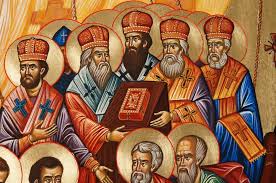
The Orthodox Church
The Orthodox Church today, numbering over 250 million worldwide, is a communion of self-governing Churches, each administratively independent of the other, but united by a common faith and spirituality. Their underlying unity is based on identity of doctrines, sacramental life and worship, which distinguishes Orthodox Christianity. The Orthodox Church embodies and expresses the rich spiritual treasures of Eastern Christianity.
It should not be forgotten that the Gospel of Christ was first preached, and the first Christian communities were established in the lands surrounding the Mediterranean Sea. It was in these eastern regions of the old Roman Empire that the Christian faith matured in its struggle against paganism and heresy.
There, the great Fathers lived and taught. It was in the cities of the East that the fundamentals of our faith were proclaimed at the Seven Ecumenical Councils. The spirit of Christianity which was nurtured in the East had a particular flavour. It was distinct, though not necessarily opposed, to that which developed in the Western portion of the Roman Empire and subsequent Medieval Kingdoms in the West. While Christianity in the West developed in lands which knew the legal and moral philosophy of Ancient Rome, Eastern Christianity developed in lands which knew the Semitic and Hellenistic cultures.
While the West was concerned with the Passion of Christ and the sin of man, the East emphasized the Resurrection of Christ and the deification of man. While the West leaned toward a legalistic view of religion, the East espoused a more mystical theology. Since the Early Church was not monolithic, the two great traditions existed together for more than a thousand years until the Great Schism divided the Church. Today, Roman Catholics and Protestants are heirs to the Western tradition, and the Orthodox are heirs to the Eastern tradition. Christians of the Eastern Churches call themselves Orthodox.
This description comes to us from the fifth century and has two meanings which are closely related. The first definition is “true teaching.” The Orthodox Church believes that she has maintained and handed down the Christian faith, free from error and distortion, from the days of the Apostles. The second definition, which is actually the more preferred, is “true praise.” To bless, praise, and glorify God the Father, Son, and Holy Spirit is the fundamental purpose of the Church. All her activities, even her doctrinal formulations, are directed toward this goal. Occasionally, the word Catholic is also used to describe the Orthodox Church.
This description, dating back to the second century, is embodied in the Nicene Creed, which acknowledges One, Holy, Catholic, and Apostolic Church. From the Orthodox perspective, Catholic means that the Church is universal and also that she includes persons of all races and cultures. It also affirms that the Church has preserved the fullness of the Christian faith. It is not unusual for titles such as Greek, Russian, and Antiochian to be used in describing Orthodox Churches. These appellations refer to the cultural or national roots of a particular parish, diocese, or archdiocese.
Diversity in Unity
The Orthodox Church is an international federation of patriarchal, autocephalous, and autonomous churches. Each church is independent in her internal organization and follows her own particular customs. However, all the churches are united in the same faith and order.
The Orthodox Church acknowledges that unity does not mean uniformity. Some churches are rich in history, such as the Church of Constantinople, while others are relatively young, such as the Church of Finland or the Patriarchate of Antioch & Jerusalem. Some are large, such as the Church of Russia, while others are small, such as the Church of Sinai. Each Church is led by a synod of bishops.
The president of the synod is known as the Patriarch, Archbishop, Metropolitan, or Catholicos. Among the various bishops, the Ecumenical Patriarch of Constantinople is accorded a "place of honour" and is regarded as "first among equals."
The Eastern Orthodox Church is one of the three largest Christian denominations, viewing itself as the original church established by Christ and the Apostles, boasting a history of "right belief". It is a communion of self-governing (autocephalous) churches, predominantly in Eastern Europe and the Middle East, with roughly 250 million adherents globally.
Core Beliefs and Practices
Theology
Orthodoxy believes in one God in three persons (Father, Son, Holy Spirit) and emphasizes the Holy Spirit proceeds from the Father alone.
Worship
Orthodox life revolves around the Liturgy and the seven Sacraments, viewing the Eucharist as the real, physical presence of Christ.
Veneration
High honour is given to the Virgin Mary ("Theotokos") and saints, along with a deep devotion to icons
Organization & Structure
The Church is not headed by a single pope, but rather is a communion of autocephalous churches (e.g., Greek Orthodox, Russian Orthodox, Antiochian) that are self-governing and overseen by patriarchs or metropolitans. These churches are united in faith, sacraments, and liturgical life. Key Historical Background .
Apostolic
Origin: Traces its roots directly to the Apostles.
The Great Schism
Formally separated from the Roman Catholic Church in 1054 over theological differences (like the Filioque clause) and papal authority.
Geography
While historically based in the Byzantine Empire, it is now globally spread, with significant populations in Russia, Ukraine, Romania, Greece, and throughout the diaspora in North America and Western Europe and the Middel East.
The Orthodox Church acknowledges that unity does not mean uniformity. Some churches are rich in history, such as the Church of Constantinople, while others are relatively young, such as the Church of Finland or the Patriarchate of Antioch & Jerusalem.
Some are large, such as the Church of Russia, while others are small, such as the Church of Sinai. Each Church is led by a synod of bishops. The president of the synod is known as the Patriarch, Archbishop, Metropolitan, or Catholicos. Among the various bishops, the Ecumenical Patriarch of Constantinople is accorded a "place of honour" and is regarded as "first among equals."
The Eastern Orthodox Church is one of the three largest Christian denominations, viewing itself as the original church established by Christ and the Apostles, boasting a history of "right belief".
It is a communion of self-governing (autocephalous) churches, predominantly in Eastern Europe and the Middle East, with roughly 250 million adherents globally.
The Orthodox Church today, numbering over 250 million worldwide, is a communion of self-governing Churches, each administratively independent of the other, but united by a common faith and spirituality. Their underlying unity is based on identity of doctrines, sacramental life and worship, which distinguishes Orthodox Christianity. The Orthodox Church embodies and expresses the rich spiritual treasures of Eastern Christianity.
It should not be forgotten that the Gospel of Christ was first preached, and the first Christian communities were established in the lands surrounding the Mediterranean Sea. It was in these eastern regions of the old Roman Empire that the Christian faith matured in its struggle against paganism and heresy.
There, the great Fathers lived and taught. It was in the cities of the East that the fundamentals of our faith were proclaimed at the Seven Ecumenical Councils. The spirit of Christianity which was nurtured in the East had a particular flavour. It was distinct, though not necessarily opposed, to that which developed in the Western portion of the Roman Empire and subsequent Medieval Kingdoms in the West. While Christianity in the West developed in lands which knew the legal and moral philosophy of Ancient Rome, Eastern Christianity developed in lands which knew the Semitic and Hellenistic cultures.
While the West was concerned with the Passion of Christ and the sin of man, the East emphasized the Resurrection of Christ and the deification of man. While the West leaned toward a legalistic view of religion, the East espoused a more mystical theology. Since the Early Church was not monolithic, the two great traditions existed together for more than a thousand years until the Great Schism divided the Church. Today, Roman Catholics and Protestants are heirs to the Western tradition, and the Orthodox are heirs to the Eastern tradition. Christians of the Eastern Churches call themselves Orthodox.
This description comes to us from the fifth century and has two meanings which are closely related. The first definition is “true teaching.” The Orthodox Church believes that she has maintained and handed down the Christian faith, free from error and distortion, from the days of the Apostles. The second definition, which is actually the more preferred, is “true praise.” To bless, praise, and glorify God the Father, Son, and Holy Spirit is the fundamental purpose of the Church. All her activities, even her doctrinal formulations, are directed toward this goal. Occasionally, the word Catholic is also used to describe the Orthodox Church.
This description, dating back to the second century, is embodied in the Nicene Creed, which acknowledges One, Holy, Catholic, and Apostolic Church. From the Orthodox perspective, Catholic means that the Church is universal and also that she includes persons of all races and cultures. It also affirms that the Church has preserved the fullness of the Christian faith. It is not unusual for titles such as Greek, Russian, and Antiochian to be used in describing Orthodox Churches. These appellations refer to the cultural or national roots of a particular parish, diocese, or archdiocese.
Diversity in Unity
The Orthodox Church is an international federation of patriarchal, autocephalous, and autonomous churches. Each church is independent in her internal organization and follows her own particular customs. However, all the churches are united in the same faith and order.
The Orthodox Church acknowledges that unity does not mean uniformity. Some churches are rich in history, such as the Church of Constantinople, while others are relatively young, such as the Church of Finland or the Patriarchate of Antioch & Jerusalem. Some are large, such as the Church of Russia, while others are small, such as the Church of Sinai. Each Church is led by a synod of bishops.
The president of the synod is known as the Patriarch, Archbishop, Metropolitan, or Catholicos. Among the various bishops, the Ecumenical Patriarch of Constantinople is accorded a "place of honour" and is regarded as "first among equals."
The Eastern Orthodox Church is one of the three largest Christian denominations, viewing itself as the original church established by Christ and the Apostles, boasting a history of "right belief". It is a communion of self-governing (autocephalous) churches, predominantly in Eastern Europe and the Middle East, with roughly 250 million adherents globally.
Core Beliefs and Practices
Theology
Orthodoxy believes in one God in three persons (Father, Son, Holy Spirit) and emphasizes the Holy Spirit proceeds from the Father alone.
Worship
Orthodox life revolves around the Liturgy and the seven Sacraments, viewing the Eucharist as the real, physical presence of Christ.
Veneration
High honour is given to the Virgin Mary ("Theotokos") and saints, along with a deep devotion to icons
Organization & Structure
The Church is not headed by a single pope, but rather is a communion of autocephalous churches (e.g., Greek Orthodox, Russian Orthodox, Antiochian) that are self-governing and overseen by patriarchs or metropolitans. These churches are united in faith, sacraments, and liturgical life. Key Historical Background .
Apostolic
Origin: Traces its roots directly to the Apostles.
The Great Schism
Formally separated from the Roman Catholic Church in 1054 over theological differences (like the Filioque clause) and papal authority.
Geography
While historically based in the Byzantine Empire, it is now globally spread, with significant populations in Russia, Ukraine, Romania, Greece, and throughout the diaspora in North America and Western Europe and the Middel East.
The Orthodox Church acknowledges that unity does not mean uniformity. Some churches are rich in history, such as the Church of Constantinople, while others are relatively young, such as the Church of Finland or the Patriarchate of Antioch & Jerusalem.
Some are large, such as the Church of Russia, while others are small, such as the Church of Sinai. Each Church is led by a synod of bishops. The president of the synod is known as the Patriarch, Archbishop, Metropolitan, or Catholicos. Among the various bishops, the Ecumenical Patriarch of Constantinople is accorded a "place of honour" and is regarded as "first among equals."
The Eastern Orthodox Church is one of the three largest Christian denominations, viewing itself as the original church established by Christ and the Apostles, boasting a history of "right belief".
It is a communion of self-governing (autocephalous) churches, predominantly in Eastern Europe and the Middle East, with roughly 250 million adherents globally.